
Bronze bushings and sleeve bearings are used where a shaft, pin or moving surface needs a replaceable bearing material with controlled friction, wear resistance and suitable load capacity. Mete Prime supplies custom bronze bushings and sleeves through our foundry group's production capabilities in Türkiye, with European and Adriatic sales coordination from Bar, Montenegro. Drawings, samples or existing parts can be used for initial review.
Bushing and Bearing Configurations
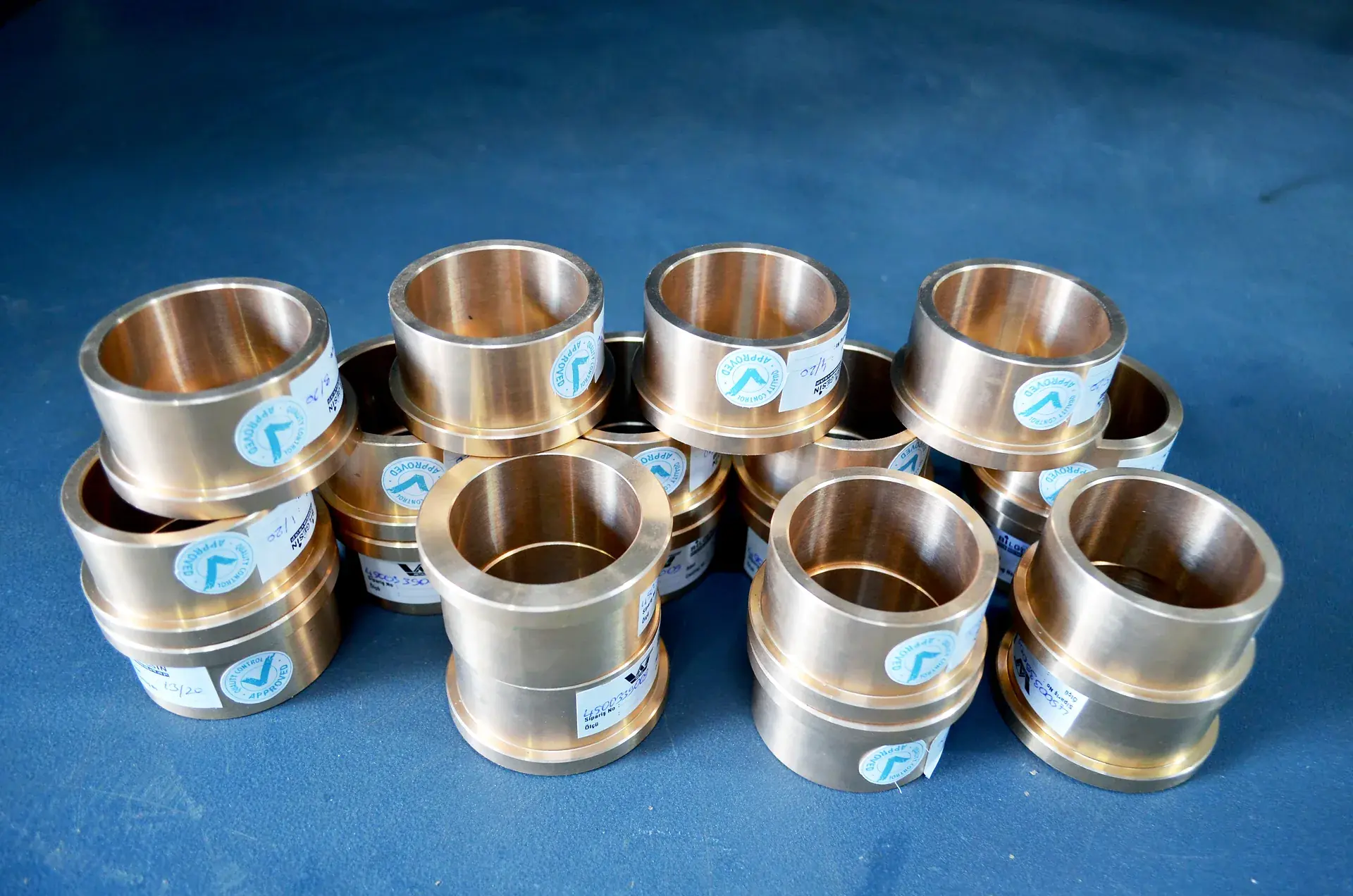
Bushing geometry is defined by the assembly dimensions, fit requirements and operating conditions. Common configurations include cylindrical sleeve bushings, flanged bushings, large-diameter bearing sleeves, rings, thrust elements and custom bearing components with lubrication grooves, holes, mounting details or special wall thicknesses.
Plain and Flanged Bushings
A plain sleeve bushing supports radial movement between a shaft or pin and its housing. A flanged bushing adds an axial locating or thrust surface. Both forms may be supplied as rough blanks, pre-machined parts or finished components depending on the required fit and the customer machining strategy.
Graphite-Plugged and Self-Lubricating Designs
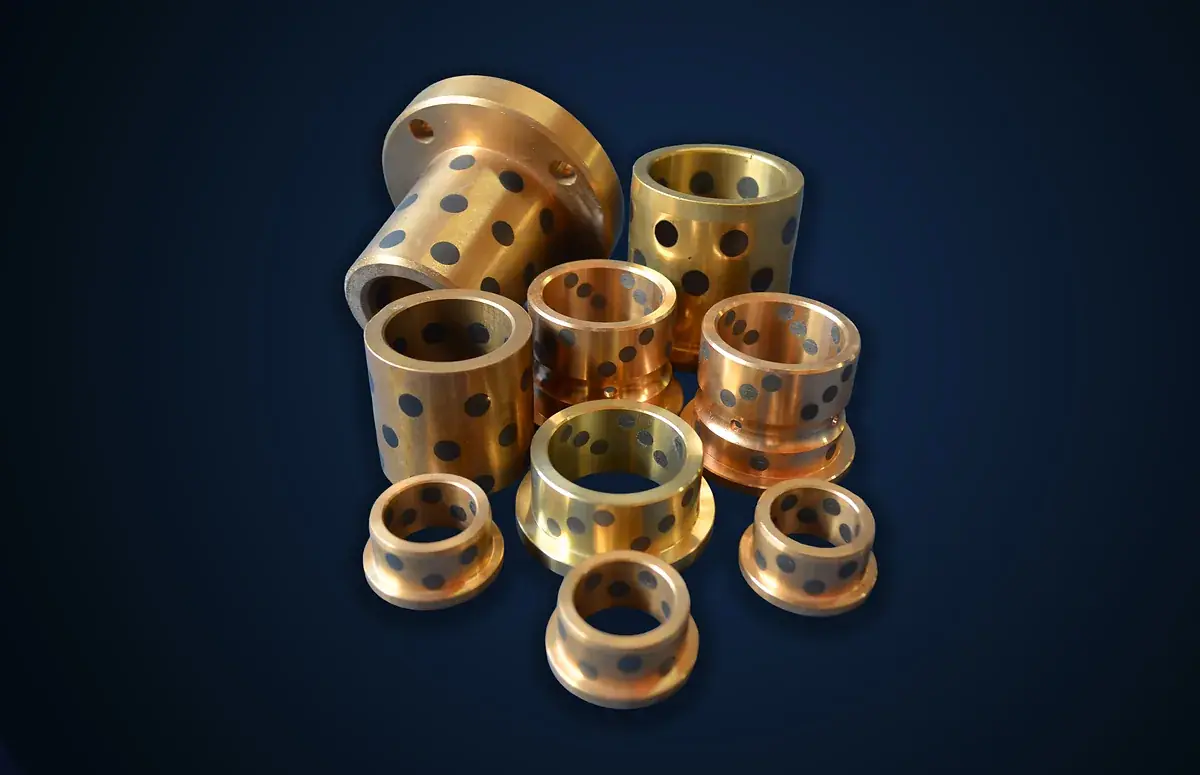
For low-speed, high-load or difficult-to-lubricate positions, a solid bronze component may incorporate graphite or other solid-lubricant plugs in a defined pattern. Plug size and distribution are specified according to the application, mating surface and operating conditions.
Centrifugal Casting for Cylindrical Components
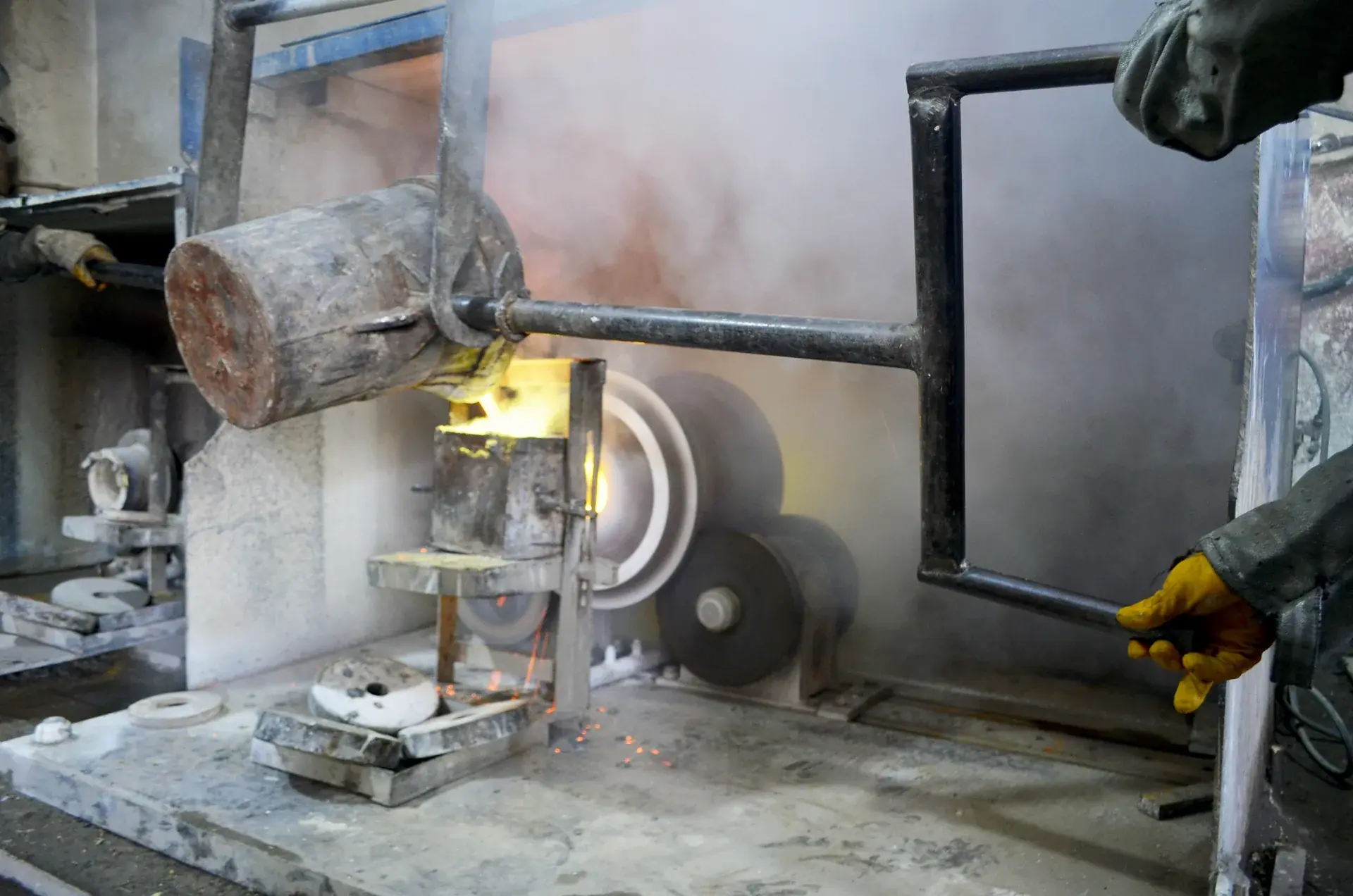
Centrifugal casting is a natural manufacturing route for many hollow cylindrical bronze components. Molten metal solidifies against a rotating mould, creating a tubular casting that can then be machined to the required bore, outside diameter and length.
Because the hollow section is created directly by the process, a centrifugal blank is often a more efficient starting geometry than a large solid billet when the finished part contains a substantial bore. Less material is removed at the machining stage and the wall structure is formed under pressure against the mould.
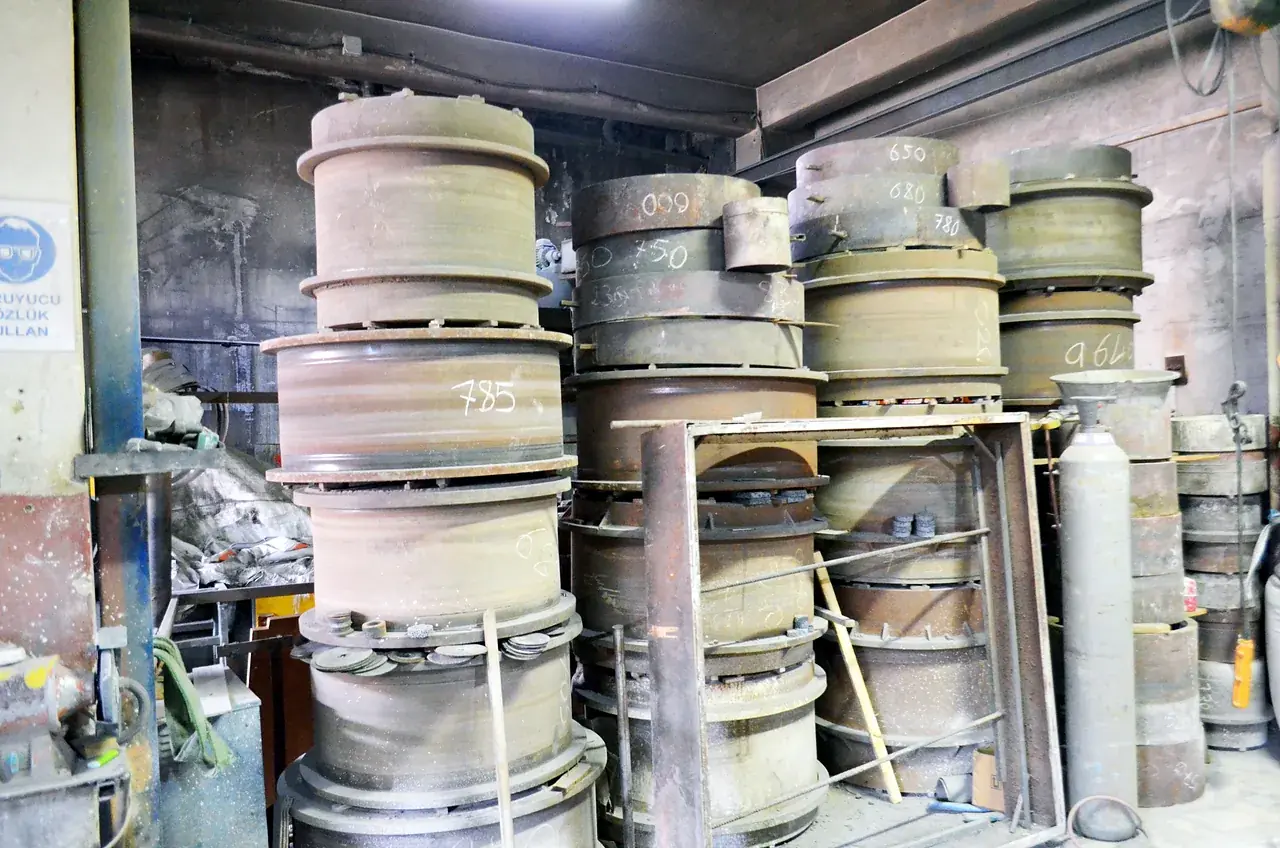
Verified capacity for centrifugal casting is shown opposite. The manufacturing route is reviewed against the required dimensions, alloy and order quantity. Depending on the component, supply may also be based on a sand-cast blank or suitable continuous-cast material.
Why Bronze Is Used in Plain Bearings
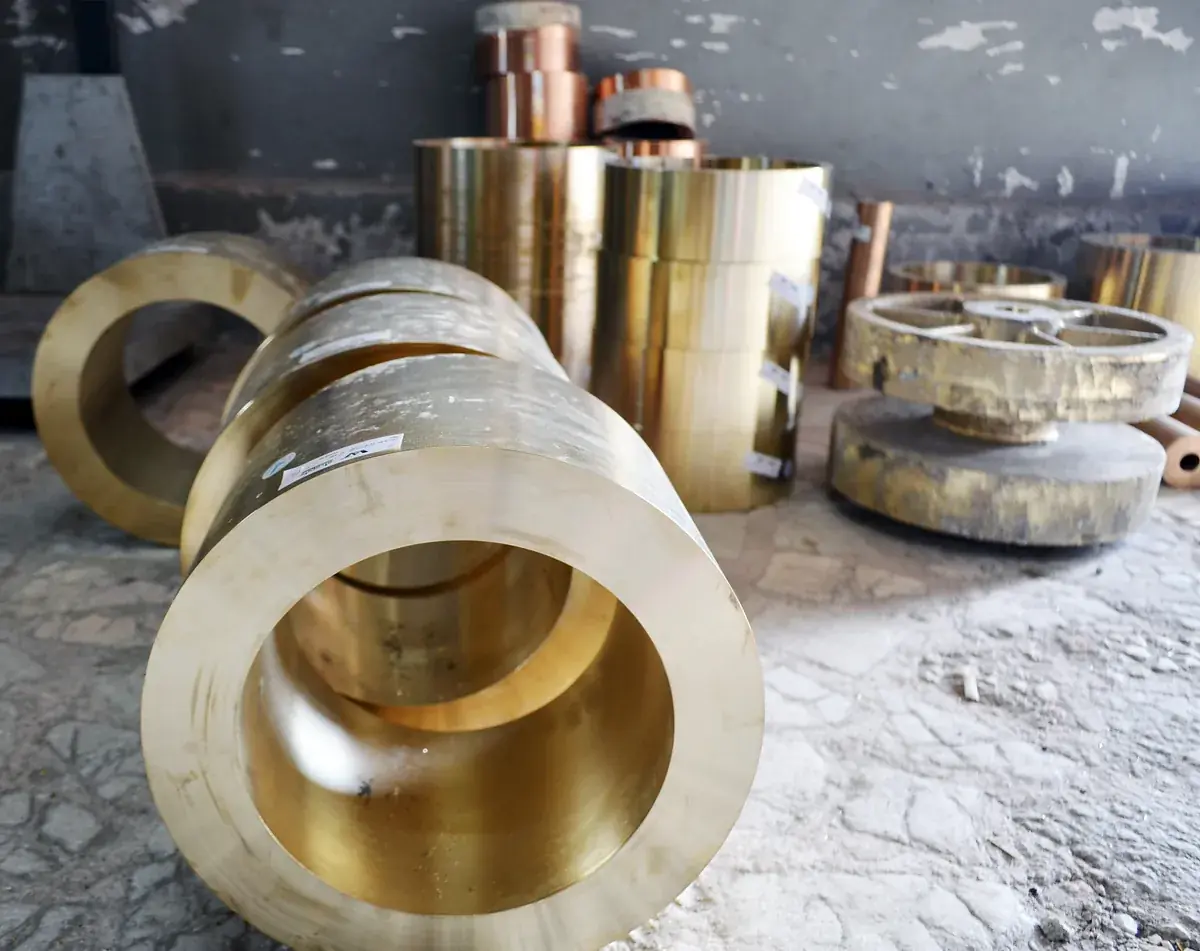
Copper alloys are widely used in bearing applications because different bronze families can combine load capacity, wear resistance, corrosion resistance, conformability and machinability. Tin bronzes are known for strength and wear performance in bearing service, while aluminium bronzes are selected when higher mechanical strength or aggressive environments are important.
The correct choice also depends on shaft hardness, lubrication, sliding speed, shock load, temperature and contamination.
Send Your Bushing Drawing, Sample or Dimensions
Share your drawing or available dimensions for review. If a drawing is unavailable, photographs with reference dimensions or an existing sample can support an initial assessment.